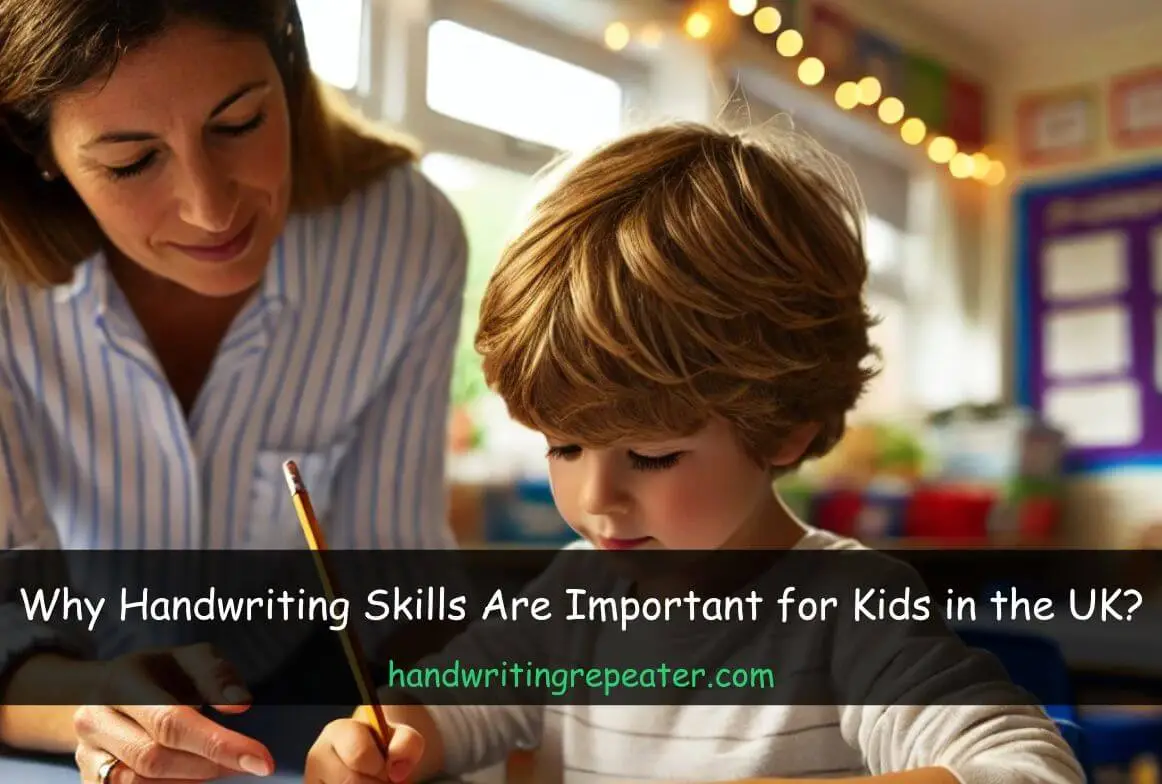
Handwriting skills are important for kids in the UK, helping with learning, memory, and motor development. While technology is advancing, handwriting remains a crucial skill for academic success and creativity. This article explores why handwriting is important and how it benefits a child’s overall growth.
Handwriting Skills Are Important for Kids in the UK
Handwriting skills help children develop better focus, memory retention, and academic success. In the UK, where written assessments still play a major role in education, good handwriting ensures students can express their ideas clearly and confidently. Developing neat and legible handwriting also improves overall learning abilities and cognitive functions.
1. Enhances Cognitive Development
Handwriting plays a significant role in cognitive development. When children write by hand, they engage multiple brain regions responsible for thinking, memory, and motor skills. Studies suggest that writing letters manually helps in better recognition and retention compared to typing on a keyboard. In UK schools, children who practise handwriting regularly often show improved language processing and reading comprehension.
2. Boosts Academic Performance
Strong handwriting skills contribute to better academic performance. Exams and assignments often require children to write answers quickly and legibly. Poor handwriting can hinder their ability to express ideas effectively, potentially affecting grades. The UK curriculum still emphasises written assessments, making it essential for children to develop a fluent and readable handwriting style.
3. Improves Fine Motor Skills
Handwriting strengthens fine motor skills by requiring precise finger movements and hand-eye coordination. These skills are fundamental for daily activities such as buttoning a shirt, using cutlery, or playing musical instruments. Occupational therapists in the UK often recommend handwriting exercises to improve children’s dexterity and control over small hand movements.
4. Encourages Creativity and Self-Expression
Writing by hand allows children to express themselves freely. Unlike typing, where uniform fonts limit personalisation, handwriting gives children the ability to develop their unique style. Creative activities like journaling, storytelling, and calligraphy foster a child’s imagination and encourage self-confidence.
5. Strengthens Memory and Learning Abilities
Handwriting is linked to better memory retention. When children take notes by hand, they process information more effectively than those who type on digital devices. In UK classrooms, teachers often encourage handwritten note-taking to help students absorb and recall lessons more efficiently.
6. Reduces Screen Dependency
With increased screen time among children, handwriting offers a valuable break from digital devices. Writing by hand reduces eye strain and promotes better posture. Encouraging children to practise handwriting daily can help balance their screen exposure and improve their focus on traditional learning methods.
7. Builds Confidence and Independence
Children who develop strong handwriting skills feel more confident in their academic abilities. Struggling with handwriting can lead to frustration and low self-esteem. In the UK, many schools provide additional support for students with handwriting difficulties to ensure they don’t fall behind.
Final Words
Despite the digital revolution, handwriting remains a fundamental skill for children in the UK. It enhances cognitive abilities, boosts academic performance, improves fine motor skills, and strengthens memory retention. Encouraging children to practise handwriting not only benefits their education but also fosters creativity and independence. Parents and educators should continue to emphasise handwriting to help children develop essential skills that will benefit them throughout life.
Looking for More Fun Handwriting Resources?✍️👇
Try our Handwriting Writing Repeater Tool to help kids practise writing letters smoothly and effortlessly!

The Handwriting Repeater Team builds free online handwriting tools trusted by UK teachers and parents. Our tools support the UK National Curriculum across EYFS, KS1, and KS2 — and we’ve heard directly from classroom teachers across the UK about how they use Handwriting Repeater in their daily lessons.